
Na Hoku Hanohano
Moe Keale Aloha Is Award
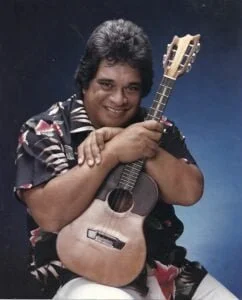
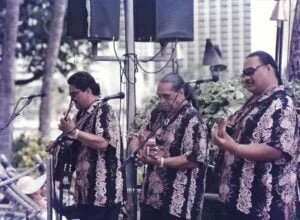
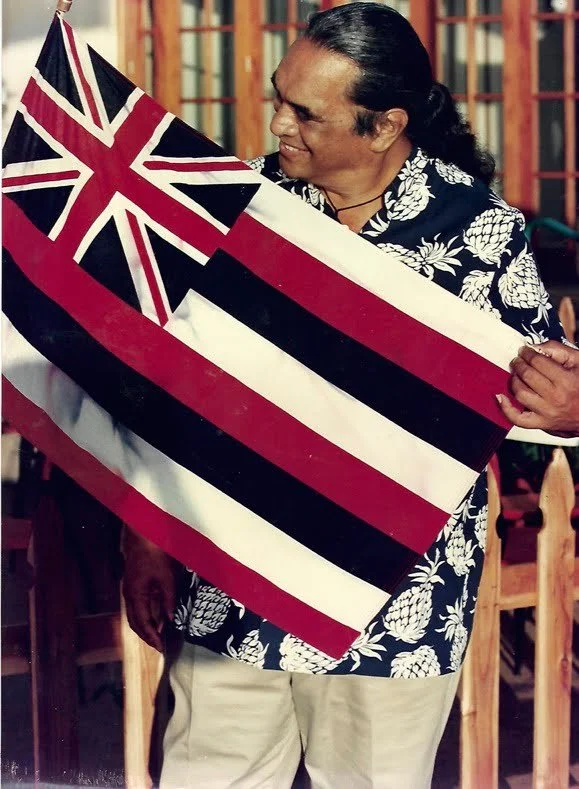
The Legacy of Wilfred Nalani “Moe” Keale
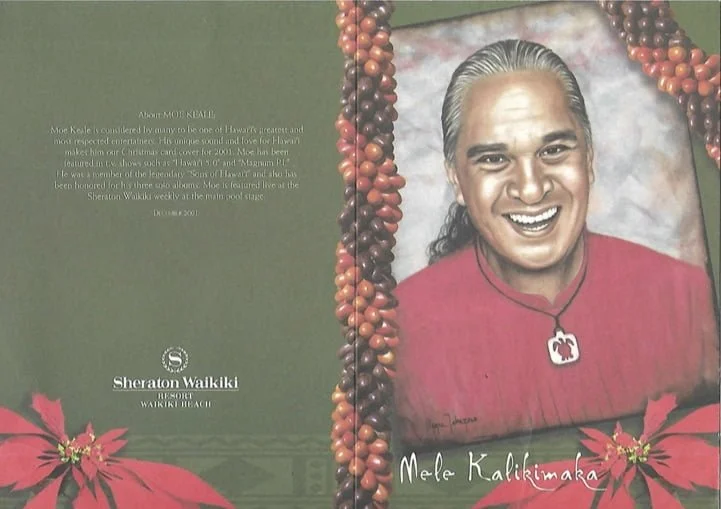
Wilfred Nalani “Moe” Keale (December 3, 1939 – April 15, 2003) was one of Hawaiʻi’s most beloved entertainers, celebrated not only for his unmistakable voice and masterful ʻukulele playing, but for the spirit of aloha he shared with everyone he met. Born on the island of Niʻihau, Moe was raised in a family deeply rooted in Hawaiian culture, music, and traditional values. He began playing the ʻukulele at the age of five, beginning a lifelong journey that would make him one of Hawaiʻi’s most recognizable musical ambassadors.
More than an accomplished entertainer, Moe was guided by the teachings of his mentor and hānai mother, Pilahi Paki—a revered Hawaiian cultural practitioner and educator. Pilahi came from a distinguished Hawaiian lineage and dedicated her life to preserving and sharing the wisdom of the ancestors.
One of Pilahi’s most enduring contributions was her interpretation of the deeper meaning of ALOHA, which she believed had been divinely inspired. She taught that each letter represents a fundamental Hawaiian value:
A – Akahai: Kindness expressed with tenderness.
L – Lōkahi: Unity expressed through harmony.
O – ʻOluʻolu: Agreeableness expressed with pleasantness.
H – Haʻahaʻa: Humility expressed with modesty.
A – Ahonui: Patience expressed with perseverance.
Pilahi believed these values represented far more than a greeting or farewell. She taught that Aloha is the spiritual essence of God within every person and every living thing. By recognizing that shared divine essence, humanity could live with compassion, respect, and peace. Her teachings became widely embraced throughout Hawaiʻi and inspired what is now reflected in the State of Hawaiʻi's Aloha Spirit law.
When Pilahi Paki passed away in 1985, she entrusted her mana and kuleana to her hānai son, Moe Keale. She charged him with carrying the message of Aloha to the world.
Moe embraced that responsibility wholeheartedly.
Throughout his life, he evolved from simply living aloha to truly being Aloha. Whether performing on stage, acting on television and film, or meeting someone for the very first time, Moe treated every individual with warmth, dignity, and unconditional acceptance. He had a remarkable ability to make people feel seen, valued, and understood, leaving a lasting impression on everyone fortunate enough to know him.
Moe recognized that his extraordinary musical gifts were more than talents—they were a calling. Through his distinctive voice, heartfelt performances, and signature ʻukulele style, he reached audiences around the world. He believed that being an entertainer gave him a unique opportunity to influence lives, not simply through music, but through the example of compassion, humility, and aloha.
Today, Moe Keale's legacy lives on through his recordings, performances, and, most importantly, the values he embodied. His life serves as a reminder that Aloha is not merely something we say, it is something we choose to live each day.
Moe's Final Years and Lasting Legacy
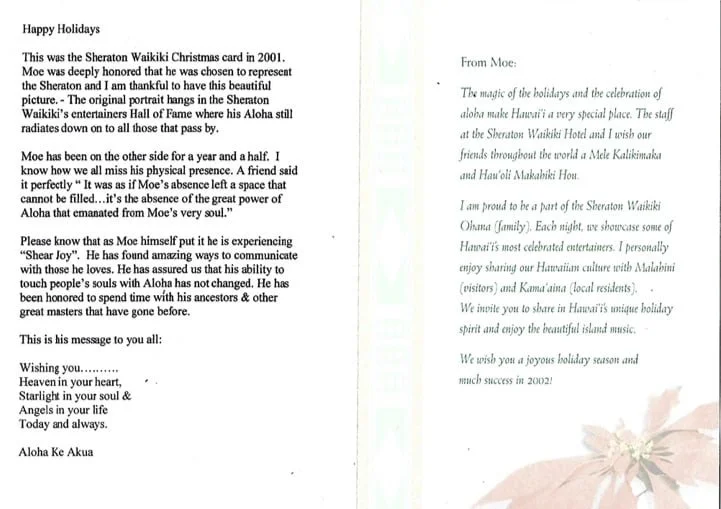
In 2001, Moe experienced an event that would forever strengthen his purpose. While exercising at a gym, he suffered a sudden cardiac arrest—an event that is often fatal without immediate intervention. According to his physicians, Moe was clinically dead for approximately seven and a half minutes before his heart began beating again. He remained in an unresponsive coma for four and a half days, and his medical team believed that, if he survived, he would likely suffer severe brain damage.
Instead, Moe awakened with no lasting neurological impairment.
Following his recovery, Moe openly shared his extraordinary experience. He spoke of the loved ones he encountered, the incredible music he heard, and the profound peace he experienced while on the other side. For Moe, surviving was not simply a miracle, it was confirmation that he still had an important mission to fulfill.
He dedicated the final year of his life to spreading the message of Aloha with even greater purpose and became a passionate advocate for public access to automated external defibrillators (AEDs). Believing that no family should lose a loved one simply because lifesaving equipment was unavailable, Moe worked tirelessly to educate the public and encourage state leaders to place defibrillators in schools, libraries, airports, and other public facilities throughout Hawaiʻi.
His efforts helped transform public awareness of sudden cardiac arrest and contributed to a dramatic expansion of AED availability across the state, improving countless opportunities for survival.
On April 15, 2002, Moe Keale passed away from a massive heart attack. Although his life was cut short, his influence continues to touch generations through his music, his unwavering compassion, and his enduring message that Aloha is a way of life.
The "Aloha Is" Award
One of Moe's greatest legacies is the Moe Keale "Aloha Is" Award, established to recognize entertainers who use their public platform to make a meaningful difference in their communities.
Moe believed that entertainers possess a unique ability to inspire others and create positive change beyond the stage. Throughout Hawaiʻi, countless artists quietly dedicate their time, talent, and resources to helping others without seeking recognition. The Aloha Is Award was created to honor those individuals who embody the true spirit of Aloha through service, generosity, and community leadership.
Presented annually during the Hawaiʻi Academy of Recording Arts (HARA) Nā Hōkū Hanohano Awards, the award is administered by Carol Keale through the Aloha Is Foundation, a 501(c)(3) nonprofit organization. Recipients receive a handcrafted Kamaka ʻUkulele along with a $1,000 honorarium generously provided by Judith Puna Flanders and the Flanders/Staub ʻOhana.
Each year, previous recipients nominate and vote to select the next honoree, ensuring that the award remains a recognition bestowed by fellow artists who understand the true meaning of living Aloha.
Today, the Moe Keale "Aloha Is" Award continues to celebrate those who, like Moe himself, use their gifts not only to entertain, but to uplift, inspire, and serve others. It stands as a lasting reminder that the greatest legacy we leave behind is not measured by fame or success, but by the lives we touch with Aloha.
Moe Keale ‘Aloha Is’ Awardees
2003- Frank Delima
2004 Kimo Kahoano
2005 ‘Aunty’ Genoa Leilani Adolpho Keawe-Aiko
2006 Jerry Santos
2007 Eddie Kamae
2008 Nina Kealiiwahamana
2009 Brother Noland Conjugation
2010 George Ka’ahumoku
2011 Carol Kai
2012 Haunani Apoliona
2013 Honolulu Skylark
2014 Ku’uipo Kumukahi
2015 Melveen Leed
2016 Jimmy Borges.
2017 Billy V.
2018 Frank Kawaikapuokalani Hewett
2019 Ledward Kaapana
2020 Lea Uehara
2021 Harry B Soria
2022 Puakea Nogelmeire
2023 Aaron Mahi
2024 Henry Kapono
2025 Kenneth Makuakane
2026 Roy Sakuma
Aloha Chant
Kaula Ili
Hawaiian Soul
Mapuna Ka Hala O Kailua
Aloha Is
Lyrics by Pilahi Paki
Music by Jay Larrin
Vocals by Moe Keale
From the recordings, “Aloha Is A Part Of You, A Part Of Me,” by Moe Keale
Aloha is a promise the sun will shine again,
Bringing fresh hopes and dreams,
With each new day that begins.
Aloha is the sunlight,
Shining through the darkness,
Giving strength, giving strength, to all we do.
Aloha is His grace, walking in the sunlight,
Feeling the beauty of life,
Feeling the beauty of life.
Aloha is His helping hand,
His warm and comforting voice.
It is peace, be with you,
In Love forever and always.
Aloha is the mind, the heart,
In perfect harmony,
It’s tenderness and love,
Deep in the heart of Hawaii.
Aloha is Hawaii, Hawaii is Aloha,
Hawaii is Aloha ia oe, I love you,
Aloha au ia oe Hawaii, I love you.